I Was Going to Leave Singapore Without Ever Seeing This
It was raining when I decided not to go. My shoes were ready by the...
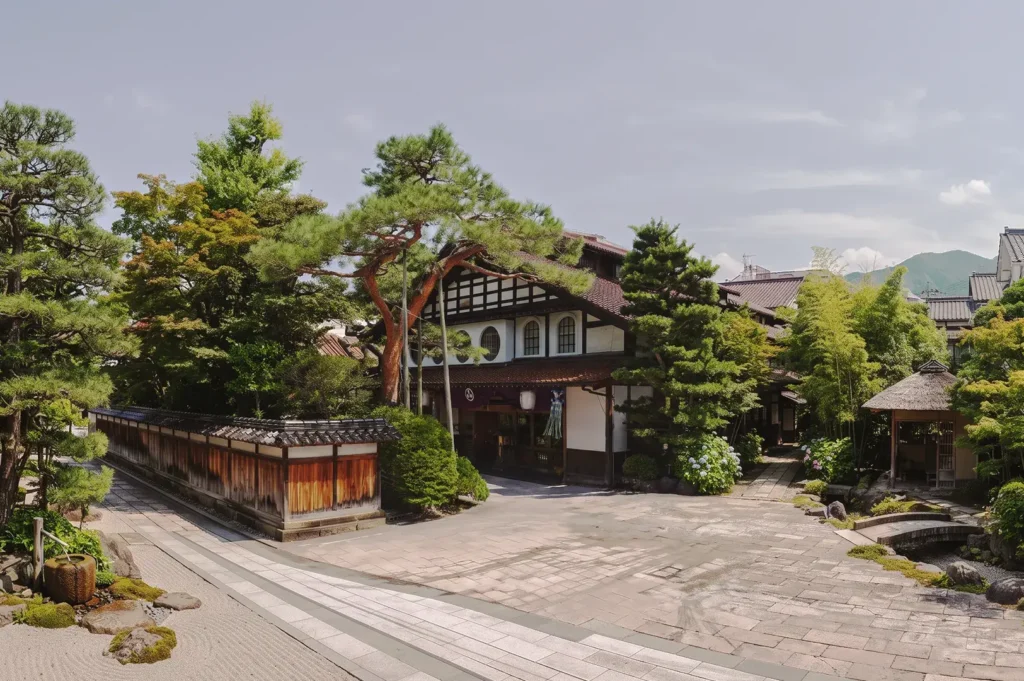
Quick answer: A ryokan is a traditional Japanese inn built around hospitality, seasonal food, and rest rather than convenience. Unlike a Western hotel, a ryokan stay includes tatami rooms, futon bedding laid out by staff, a multi-course kaiseki dinner, and often a shared or private onsen bath.
The first time I stayed at a ryokan, I made almost every mistake a first-timer can make. I wore my slippers into the bathroom. I almost entered the onsen without understanding the bathing ritual that comes before it. I even asked the innkeeper what time “checkout” was for the private garden, as if it were a spa appointment rather than a place I was simply allowed to walk through.
A ryokan is a traditional Japanese inn, with a history stretching back over a thousand years to the Edo period, when they served travelers moving between towns along Japan’s old highways. Some ryokans still operating today have been run by the same family for ten or more generations.
At its core, a traditional ryokan is built around three things: tatami-mat rooms with tatami as the traditional flooring, seasonal kaiseki dining, and hot spring or communal bathing. But the deeper distinction is philosophical. A ryokan isn’t selling a room. It’s offering omotenashi — a Japanese concept of hospitality that anticipates a guest’s needs before they’re spoken aloud. There’s no tipping, no transactional exchange of service for money. The care is simply extended, quietly, as a matter of tradition. Together, these features reflect core elements of Japanese culture and Japanese hospitality.
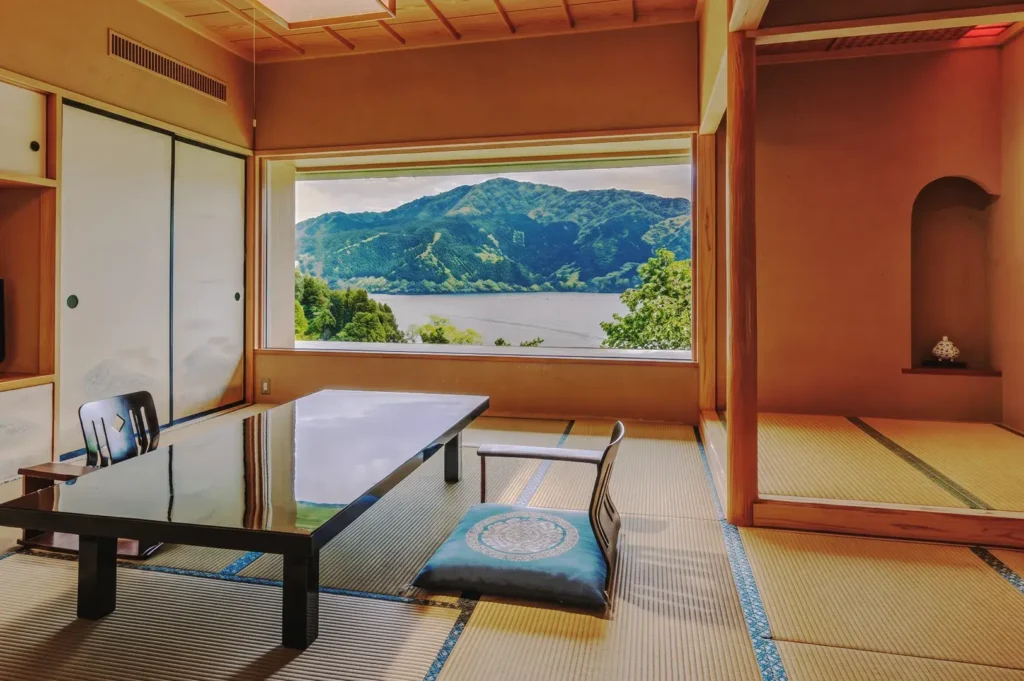
I think the easiest way to understand a ryokan is to notice what it removes rather than what it adds. There’s no minibar to browse, no room service menu, often no television positioned as the room’s focal point. What replaces those things is intention.
A few concrete differences stand out:
Staff-guest relationships. In a Western hotel, staff interactions are usually transactional and brief. In a ryokan, the same staff member — called a nakai-san — often looks after your room for the entire stay, serving your meals, preparing your futon, and remembering small preferences from one interaction to the next.
Meals are built into the stay. Most traditional ryokan bookings include dinner and breakfast, served in your room or a private dining space, rather than left to your own arrangements, though guests who have decided not to include meals may dine at nearby restaurants instead.
Many modern ryokans have also adapted well, with some located near stations and offering Wi-Fi in public areas, while adding private onsen suites, contemporary design, and English-language service without losing that underlying philosophy.
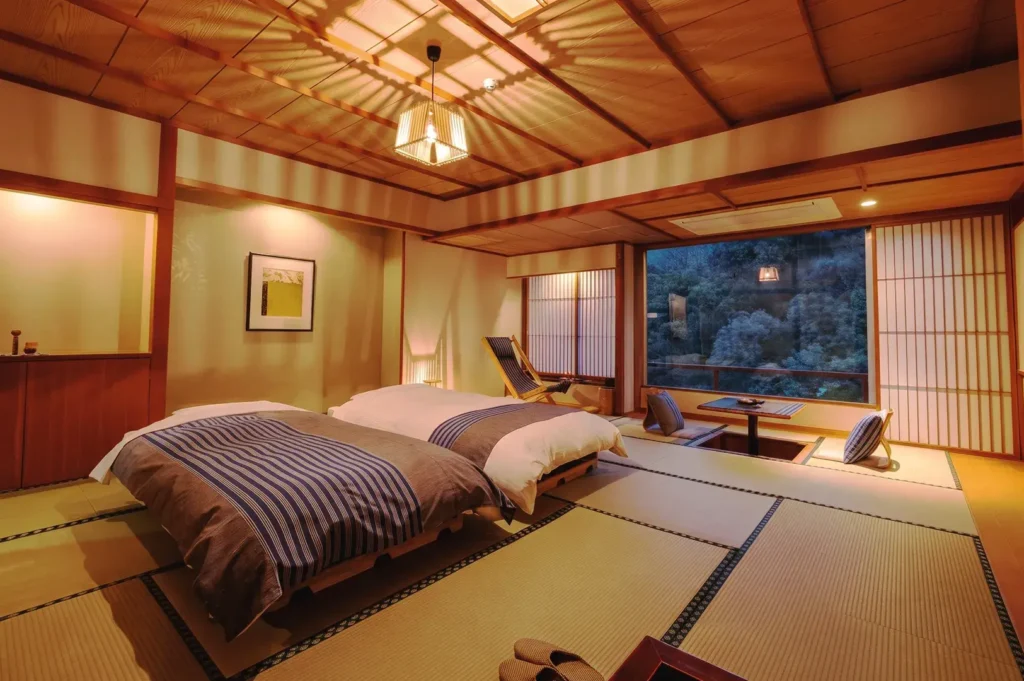
Check-in is unhurried. You remove your shoes at the entrance — this is non-negotiable, and it happens before you even reach the front desk. You’re usually offered a cup of green tea and a small sweet while a staff member explains the room, the bathing schedule, and dinner timing. When possible, they do this in clear, calm English or other languages, with staff speaking in a way that keeps the process easy to follow. Indoor slippers are provided, though those, too, come off before stepping onto tatami. Some ryokan are also reachable by shuttle bus or local bus from a train station or bus terminal.
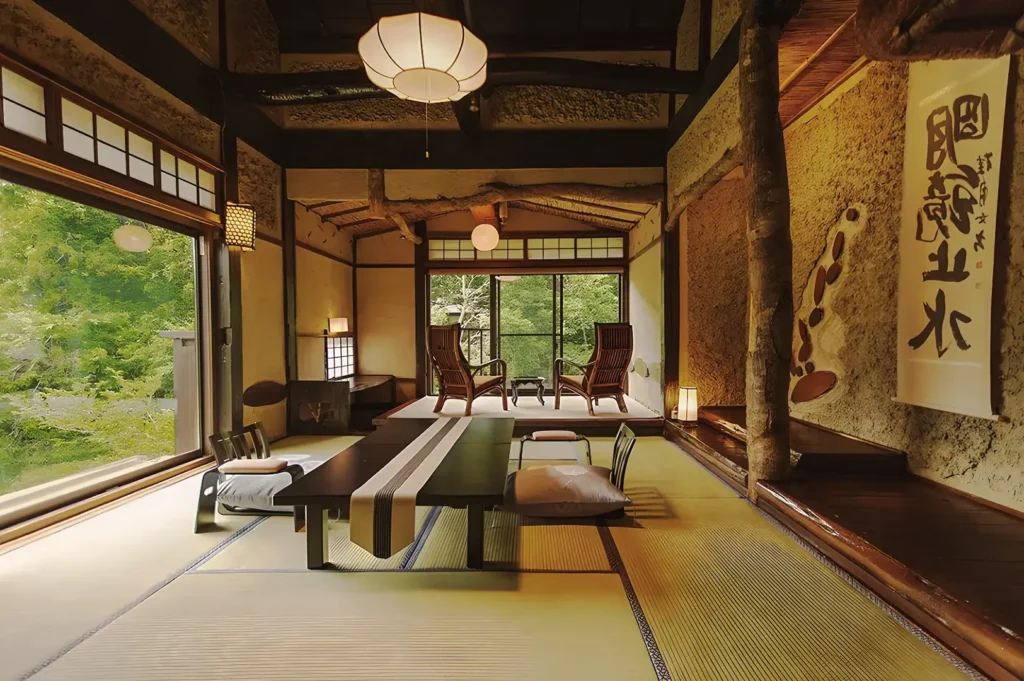
The room itself is centered on a tatami floor — woven straw mats that define both the aesthetic and the etiquette of the space. Furniture stays low. Walking on tatami in slippers or shoes is considered disrespectful, and staying and sleeping on it is one of the most recognizable elements of a traditional Japanese room, since the mats are meant to be experienced barefoot or in socks.
Dinner is usually a kaiseki meal — a multi-course, seasonally driven menu that can run to ten or more small courses, each one reflecting what’s fresh in that particular region and month. Originally, kaiseki referred to light meals served during a tea ceremony. It’s less a meal than a slow procession, and it’s worth clearing your evening schedule for it rather than treating it as a quick stop before bed.
If the ryokan has an onsen, bathing follows a specific order: undress fully in the changing area, rinse and wash thoroughly at the shower stations before entering the bath, then soak without soap or shampoo in the water itself. Swimsuits aren’t worn. Tattoos are sometimes restricted, depending on the property, so it’s worth checking in advance if that applies to you..
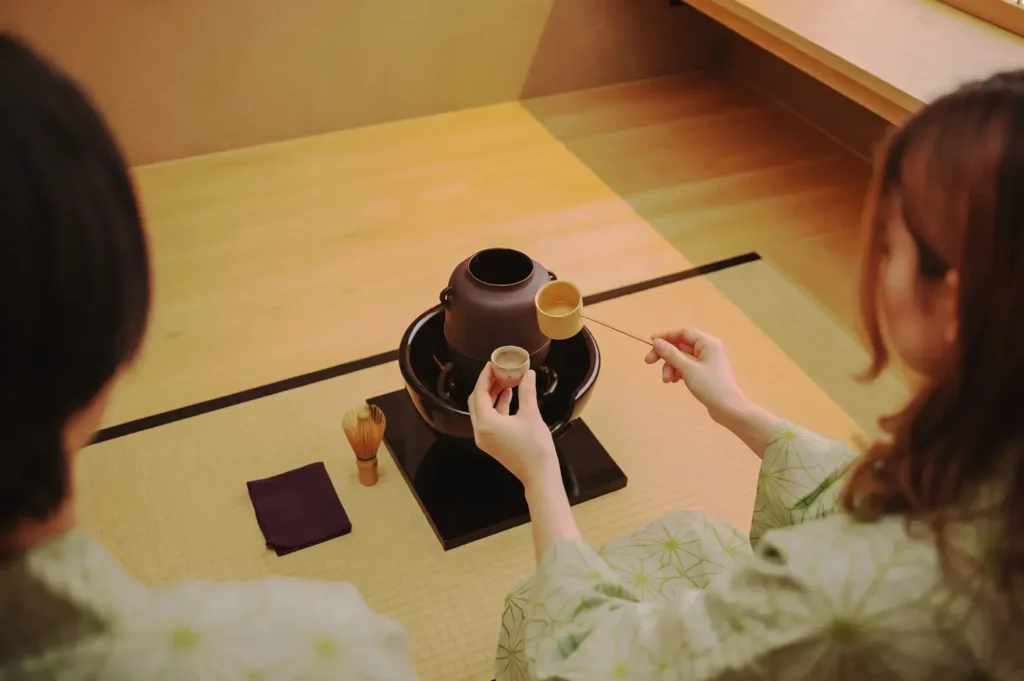
This is the part that intimidates people most, and I understand why — I felt it too. But staying at a ryokan for the first time doesn’t require fluent knowledge of Japanese customs. It requires attentiveness, which the staff will happily guide you through. When in a village, do as the villagers do is a good mindset for ryokan etiquette.
The misconception that you must arrive already fluent in these customs is one of the more common reasons people avoid ryokans altogether. In practice, most staff expect first-time guests and will correct mistakes warmly rather than silently judging them, and the routines become enjoyable once you settle into them.
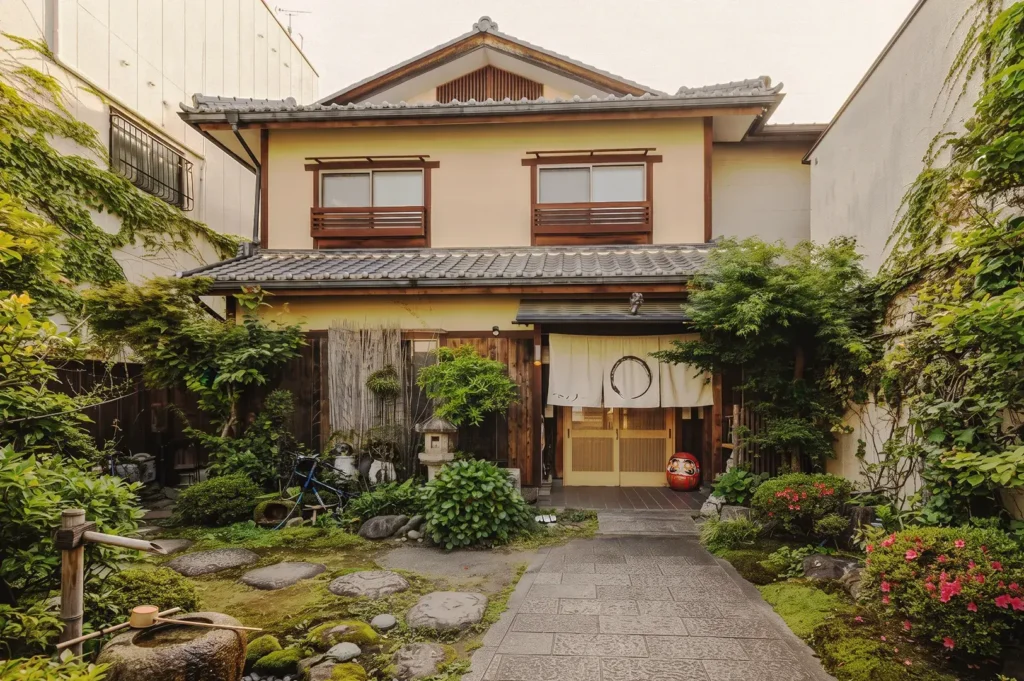
Ryokan pricing varies more than most travelers expect, largely because rates are typically quoted per person, per night, and include dinner and breakfast.
Budget ryokans: roughly ¥8,000–15,000 per person, per night. These are often family-run, with shared bathing facilities and simpler meals, but still carry the same core hospitality. Some travelers also come across minshuku, which are family-operated and resemble bed and breakfasts.
Mid-range ryokans: roughly ¥15,000–40,000 per person, per night. Expect more refined kaiseki courses, better-appointed rooms, and sometimes a private onsen option.
Luxury ryokans: ¥50,000 and above per person, per night. These properties often include in-room private baths, extended multi-course dinners, and highly personalized service.
This pricing structure is part of why the “ryokans are cheap hotel alternatives” misconception doesn’t hold up. For example, a budget ryokan can be less expensive than a mid-range city hotel, but a luxury ryokan easily rivals — or exceeds — five-star hotel pricing, because you’re paying for two full meals and dedicated staff attention, not just a room.
I’ve found that a ryokan stay works best when it’s treated as a destination in itself, not a place to sleep between sightseeing days. Japan slow travel and ryokan culture were built for each other, and many ryokan are part of a serene hot spring resort, so the entire structure of a ryokan day — from the welcome tea to the evening bath to the unhurried kaiseki dinner — feels deliberately relaxing rather than rushed across the country.
Most ryokans recommend a minimum of one night, though two nights lets you actually settle into the rhythm rather than just glimpse it and enjoy that slower pace more fully. If your trip includes a Unrushed Stays experience elsewhere in your itinerary, a ryokan dinner offers a useful point of comparison — the same reverence for seasonality, expressed through a completely different pace of service, and one of the reasons I recommend one when visiting Japan.
Autumn foliage season (late October through November) and cherry blossom season (late March through April) are the most visually striking times to visit a ryokan, particularly in Kyoto or Hakone, where gardens are designed around seasonal change and framed by mountains; some stays near Fuji or in Yamanashi Prefecture are especially known for those views. Winter, from December through February, is arguably the best season for an onsen ryokan — there’s a particular stillness to soaking in a hot spring while snow falls around you.
I don’t think there’s a universal answer here, but I can offer a few honest observations.
A ryokan stay rewards travelers who are comfortable slowing down for a night or two, especially those looking for a more traditional experience. If your itinerary is built around covering as much ground as possible, the unhurried pace of a ryokan dinner or a scheduled onsen window might feel more restrictive than restful. That’s a legitimate reason to skip it, not a failure of the experience.
Quality indicators worth checking before booking: highly-rated recent guest reviews specifically mentioning staff attentiveness, clear photos of the actual room (not stock imagery), and a menu description that names specific seasonal ingredients rather than generic terms like “Japanese cuisine,” especially if you’re booking for an authentic Japanese experience.
Red flags to watch for: ryokans that advertise themselves primarily on price, offer no meal inclusion at all, or describe the experience mainly in terms of Instagram-friendly design rather than the stay itself.
A few real scenarios, based on where and how people typically book their first ryokan hotel stay:
A first-timer in Hakone, a famous first stop for ryokan beginners and close enough to Tokyo for an easy day trip, often chooses a mid-range onsen ryokan with mountain views — a manageable introduction to the etiquette without a long journey.
A traveler booking a luxury ryokan in Kanazawa or Kinosaki Onsen usually chooses it to enjoy the fullest version of the experience: private in-room baths, extended kaiseki courses, and minimal interruption from the outside world.
The most exceptional ryokans are the ones whose setting and service are memorable enough to shape the whole trip.
For comparison, shukubo are lodgings offered by Buddhist temples in Japan.
Takayama, with its preserved Edo-era streets and access to nature, rounds out the list of destinations where a traditional ryokan feels less like a novelty and more like a continuation of the town itself.
As for what to bring: comfortable, easy-to-remove shoes, minimal jewelry (some onsens restrict metal accessories), and a willingness to move a little slower than usual. Everything else — the robe, the slippers, the tea — is provided.
If you’re deciding between ryokans and want a comparable food-focused stop elsewhere in your trip, it’s worth looking at room reviews experience that echo the same seasonal, course-by-course approach outside the inn itself.
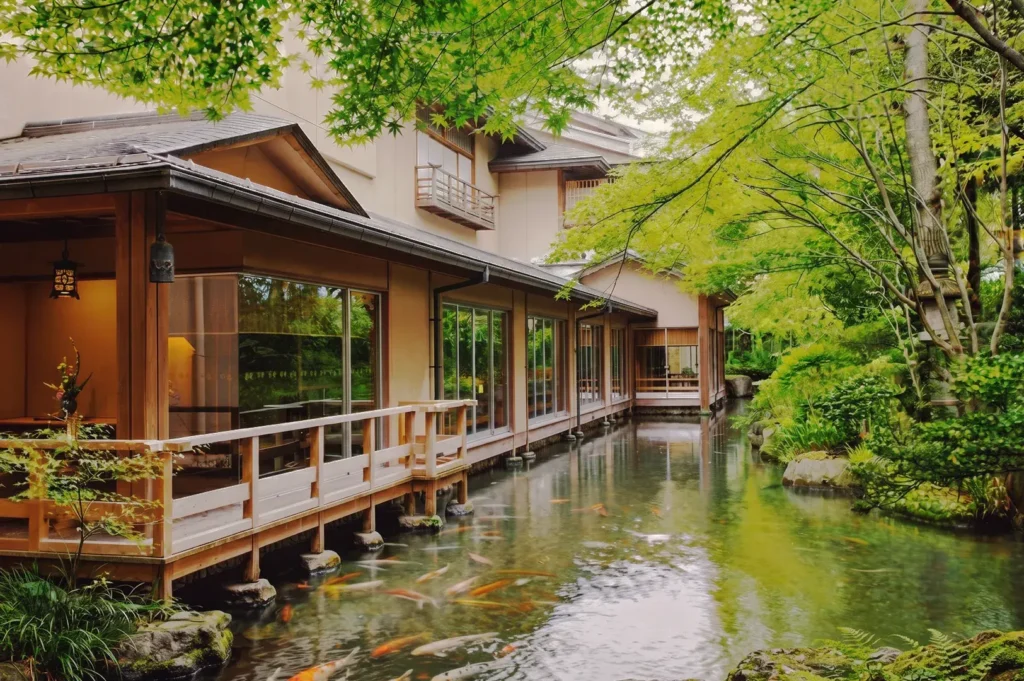
Looking back, what I remember most from that first ryokan stay isn’t the etiquette I got wrong. It’s the quiet at the end of the second night — the sound of rain against the garden outside my window, the futon already prepared, tea left warming on the table. Nothing about it was designed to impress. It was designed to be noticed slowly.
If you’re weighing whether to add a ryokan hotel to your Japan itinerary, I’d suggest picking one destination — Hakone for an easy start, Kyoto for deeper immersion, Kinosaki Onsen if the bathing culture is the main draw — and giving it at least one unhurried night to sample traditional Japan. Finally, the rest of the experience tends to explain itself, and I hope it gives you the same lasting sense of calm.